
Personal moments, quiet lessons, and things that matter to me.
Behind the Covid Inquiry findings are people we must never forget
October 2026
The Covid-19 Inquiry’s findings on adult social care bring back the difficult decisions we faced at Iden Manor; and reinforce why the people delivering care must help shape future decisions.
Reading the findings of the UK Covid-19 Inquiry’s report into adult social care brings me back to the uncertainty of that time. The conversations with our manager. The concern for residents and colleagues. The responsibility of making decisions when reliable information, equipment and practical support were difficult to find.
The Inquiry found that protecting social care appeared to be an afterthought, with the initial focus on protecting hospitals coming at the expense of people receiving and providing care.
As a nursing home owner, that finding resonates deeply. Every decision reaching our door affected someone who depended on us; a resident needing support, a worried relative or a colleague continuing to care while managing their own fears.
In late February and early March 2020, I was in close contact with a friend working as a nurse in Italy. He was witnessing the impact of the virus before we experienced its full force here. Those conversations helped me understand how urgently we needed to prepare.
We decided to “cocoon” Iden Manor, putting additional precautions around our residents and care team before national restrictions were introduced. We strengthened infection control measures, limited visiting where possible and avoided visits in communal areas where other residents could be exposed.
These were difficult decisions. I understood how much visits mattered to residents and families. But we were trying to respond to an emerging threat while protecting people whose health could make them particularly vulnerable.
We received repeated requests from referral partners to admit people from hospital. Our Registered Manager raised concerns with me that people being referred were not being tested.
We agreed that we would refuse admissions without testing. When tests had been carried out, we also insisted on receiving the results before admission, even though those results could take several days.
I supported our manager completely. We had a responsibility to the people already living at Iden Manor and to the team supporting them.
The Inquiry’s finding that patients were discharged to care homes without their Covid status being known speaks directly to that experience. It also identified a significant oversight in the initial guidance in England, Wales and Northern Ireland, which did not advise isolating residents returning from hospital.
Protective equipment was another source of considerable stress. We faced shortages and had to ration the mask supplies available to us. There was also uncertainty about which types of masks offered the appropriate protection. Eventually, I arranged a shipment of masks from China for the company’s use.
The Inquiry has described severe PPE shortages across social care, with workers left using unsuitable or poor-quality equipment, or working without it. Care cannot simply stop while supplies are sourced. People still need help washing, dressing, eating and moving. They still need comfort and reassurance. Much of that support involves close contact.
Our colleagues were being asked to continue this deeply personal work while facing uncertainty about their own safety and that of their families. Their commitment deserves lasting recognition, supported by practical measures that protect them in any future emergency.
Some of my strongest memories concern residents who were bewildered about why they could no longer see their loved ones as before. Communicating through screens could be frustrating. Families were distressed too. At times, they struggled to accept the guidance, and our team had to explain the risks while recognising how painful the separation was.
I recall a resident approaching the end of life. Despite the wider visiting restrictions, I authorised a family visit with strict infection control measures in place. That decision required us to consider the individual, their circumstances and the importance of their family being there.
The Inquiry found that the strictness and duration of visiting restrictions caused enormous harm to residents and their loved ones, often contributing to a significant decline in residents’ health and wellbeing.
That finding must inform future planning. For many people, family members provide familiarity, reassurance and help with communication. Their presence is an important part of care, particularly when someone is living with dementia or approaching the end of life.
As a provider, trying to interpret changing requirements was incredibly stressful. Changes seemed to come almost weekly, with very little practical support available to help us understand how they should work in our home.
Each update had to be understood, explained to colleagues and families, and translated into daily routines while care continued. This is why I believe social care must be involved when decisions and guidance are developed.
People delivering care understand the questions that arise in practice. How do you support someone who cannot understand why they need to isolate? How do you maintain familiar routines while reducing infection risks? How do you help a family remain involved when visiting is restricted?
Listening to providers, care workers, residents and families would help decision-makers anticipate those challenges and produce guidance that can be applied more effectively.
The Inquiry’s recommendations include clearer pandemic planning, better arrangements for isolating potentially infected residents, financial support enabling care workers to self-isolate and guidance on future visiting restrictions.
Those recommendations need to become arrangements that services can rely on; clear responsibilities, accessible advice, dependable supplies and timely support.
For me, the purpose of care remains the same. People should be able to age with dignity, receive the right support and continue to flourish. An emergency makes that responsibility more difficult, but no less important.
We cannot remove the pain of what residents, families and care workers experienced. We can ensure that their experiences shape what happens next.
The real test of this Inquiry will be whether the people who depend on social care, and those who provide it, are better protected and supported in the future.
This article reflects my experience as owner of Iden Manor Nursing Home. References to the Inquiry’s findings and recommendations are drawn from its Module 6 Report and Recommendations In Brief.
Moving beyond fear and changing the emotions surrounding social care
September 2016
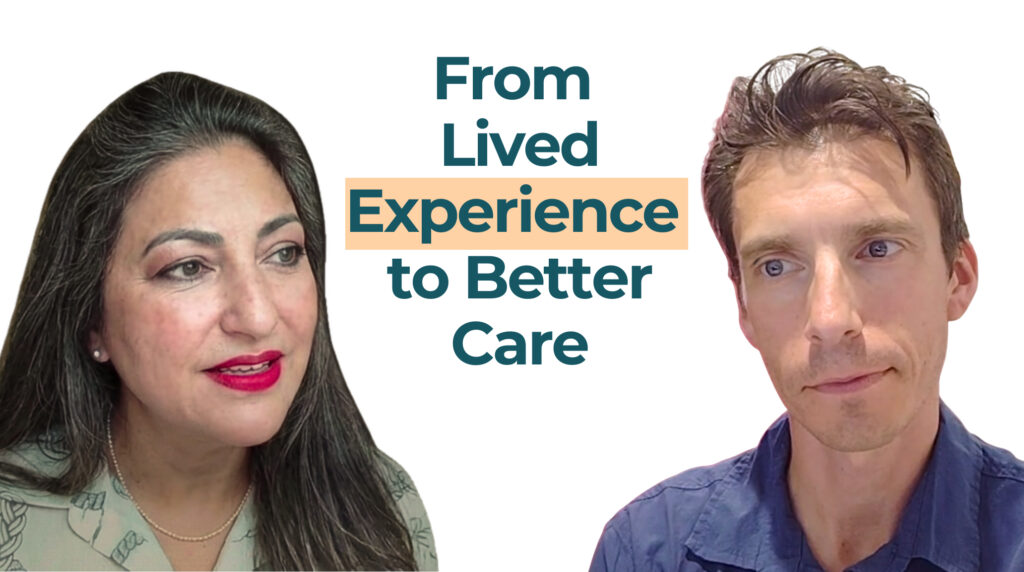
I recently had the pleasure of joining Michael Butcher on the Welcome to Social Care Podcast.
I thoroughly enjoyed our conversation and the opportunity to discuss my journey in social care, what has shaped my approach to leadership and some of the values behind what we are building at Hoama Group.
One part of our discussion that particularly stayed with me was the range of negative emotions that can surround social care. For many people, care is associated with a lack of understanding of what it can offer, fear, guilt, anxiety and loss. These emotions are understandable, but they can also prevent us from recognising what excellent social care can make possible.
Why does social care provoke such difficult emotions?
Most people do not begin thinking about social care at a calm and carefully planned moment in their lives. The conversation may follow a fall, an illness, a hospital admission or the realisation that someone is no longer managing safely at home. Families can suddenly find themselves trying to understand an unfamiliar system while making important decisions about someone they love.
The person receiving care may fear losing their independence, identity or connection with their home and community. Relatives can experience guilt because they feel they should be able to provide all the support their loved one needs themselves. There can also be sadness about the passing of time and anxiety about what the future might hold.
These feelings are real and should never be dismissed. Entering social care can represent a significant life transition for everyone involved. However, those emotions do not have to define the experience that follows.
Care should not mean the end of a meaningful life. Too often, moving into a care home is viewed solely in terms of what someone is giving up. We should also be talking about what the right care can give back. It can provide safety and reassurance, but it should offer much more than that. It can create companionship, renewed confidence, meaningful activity and opportunities to remain connected to the wider community.
For some people, receiving the right support means they can begin enjoying life again after a difficult period at home. Families can return to being husbands, wives, sons, daughters or friends rather than feeling overwhelmed by the practical demands of caring.
Good social care is not about taking control away from people. It is about providing the support that enables them to retain as much choice, independence and purpose as possible.
That is why I believe we must stop seeing care as the end of someone’s story. It should be the beginning of a different chapter in which they remain valued, involved and able to flourish.
Changing the emotions surrounding social care requires more than positive language. Families need to feel they can trust the people and organisations supporting them. We need to understand what matters to each individual; their routines, relationships, interests, culture, communication needs and personal history. We must also recognise that family members may need support and reassurance as they navigate a decision they have never faced before.
The way we welcome people into social care matters. A thoughtful and compassionate transition can begin to replace fear with confidence and uncertainty with trust.
Another important part of our podcast conversation was the need for care homes to remain connected to their local communities. A care home should never feel like a place set apart from everyday life.
People do not stop being neighbours, friends, customers or members of their community simply because they require additional support. They should continue to enjoy familiar places, meet new people and participate in the world beyond the front door.
Community connection benefits everyone. It helps residents retain a sense of belonging while challenging outdated assumptions about what life in a care home looks like. When people see care homes as active, welcoming parts of their communities, it can gradually change the wider narrative surrounding social care.
Social care must be honest about its challenges. The sector faces significant pressures, and poor care should always be challenged. However, if the only stories people hear are about crisis, failure and decline, it is unsurprising that social care becomes something to fear.
There is another side to the story. Skilled and compassionate teams helping people regain confidence, residents forming new friendships, families feeling supported and people continuing to experience enjoyment, connection and purpose.
As providers and leaders, we have a responsibility to contribute to that change. We must listen to the fears people bring with them, demonstrate what good care looks like and create environments in which people can live; not simply receive a service.
Thank you to Michael for inviting me to take part in such an open and thoughtful conversation. I hope the episode encourages more people to talk honestly about the emotions surrounding social care and how, together, we can replace fear with greater understanding, trust and hope.You can listen to the fill podcast here
Keeping the Vision in Sight
September 2026
What a journey this has been.
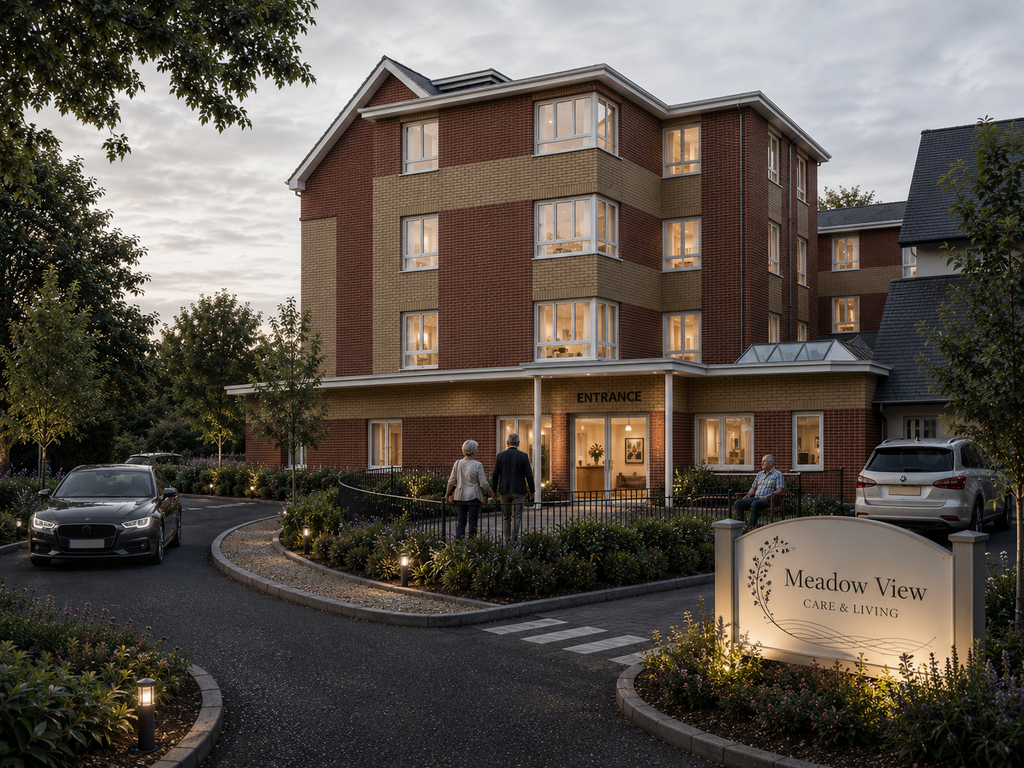
Securing the funding for Meadow View Care & Living has probably tested my determination more than I expected. There have been highs, lows, closed doors and moments when the easier thing might have been to question whether the vision was simply too ambitious.
But I could always see it in my mind’s eye. And when you can see something that clearly, I think you just keep finding another way forward.
I wasn’t too proud to knock on doors, and there were many of them. Sometimes I could see the dismissal in people’s eyes before the conversation had really begun. But then there were others who listened, understood what I was trying to build and had the will to find a solution. Those relationships mattered enormously.
For me, Meadow View represents far more than the growth of my company. It is about creating something lasting, serving the local community and showing what person-led care design can look like when you start with the people who will actually live there.
That includes creating a community specifically designed for older Deaf people whose first language is British Sign Language, alongside our commitment to building a Deaf-inclusive workforce. Accessibility shouldn’t be something we retrofit once everything else has been decided.
And perhaps there is something else in this milestone that matters to me personally. As a disabled entrepreneur, I hope someone else building something ambitious sees a little of their own possibility in this journey. You don’t have to fit the conventional picture of an entrepreneur to build, grow and lead.
Securing the funding is a significant milestone, and I’m immensely proud of it.
The hard work has only just begun, and I’m hugely excited to rise to the challenge.
Meanwhile, another vision is already taking shape in my mind’s eye… so watch this space.
Ambition, Instinct and the People You Choose to Take With You

August 2026
I have always believed in having a clear sense of where you want to go.
Not necessarily knowing every step that will take you there, because life and business rarely work quite that neatly, but knowing what you are trying to achieve and why it matters.
For me, ambition has never simply meant growth for the sake of getting bigger. It is about not standing still.
It is about looking at what you are doing today and asking whether it could be better tomorrow. Could we improve someone’s experience? Could we reach more people? Could we solve a problem differently? Could we use what we have learned to make a greater positive impact?
I have never been particularly interested in being told, “that’s just how it has always been done.” That desire to keep moving forward has shaped much of my career, and it sits at the heart of Meadow View Care & Living.
Meadow View represents a significant next chapter for Hoama Group and for me personally. It brings together many years of my own experience in social care, operating services and care home development, alongside everything we continue to learn through Iden Manor.
But experience doesn’t mean knowing everything. If anything, I think it makes you more comfortable admitting what you don’t know. Knowing enough to ask
One of the realities of running an independent care business is that you don’t have a department for everything. You learn to be resourceful.
Over the years, I have built networks, sought advice and brought in specialist expertise when I needed it. I have also learned from people and industries well beyond social care.
I find myself looking at hotels, restaurants, airports, technology and architecture and wondering: what are they doing well and what could we learn from it? I have never been afraid to ask questions, sometimes quite a lot of them.
There are people around the Meadow View table who know far more than I do about architecture, engineering, planning, ecology, interiors, construction, finance and other specialist areas. That’s precisely why they are there.
My role isn’t to pretend to be the expert in every discipline. I bring my own experience and knowledge to the table, but I also need to understand enough to ask good questions, recognise when something doesn’t feel right and listen carefully to people who know things I don’t.
And I am always willing to learn. You can have strong views and a very clear sense of direction while remaining open to somebody showing you a better way.
Asking for advice isn’t an admission that you don’t know enough. Sometimes it is evidence that you know enough to recognise when another perspective matters. Knowing when to trust yourself
There is another side to listening to other people’s expertise, and that is knowing when to listen to yourself. I have learned to trust my instinct more as I have become more experienced.
There have been occasions when something has looked perfectly sensible on paper, or the prevailing advice has pointed in one direction, but something hasn’t sat quite right with me. I’ve learned not to dismiss that too quickly.
Instinct isn’t a substitute for evidence or expertise. Often, I think it is experience speaking before you have completely worked out what it is trying to tell you. So I ask another question. I look again. Sometimes I seek another opinion. And sometimes I change my mind.
For me, good judgement sits somewhere between the two: having the confidence to trust your own experience and the humility to let somebody else’s expertise change your mind.
Choose people for values as well as expertise. Meadow View has brought together specialists across architecture, planning, engineering, interiors, ecology, construction, cost management, finance and project leadership. Their expertise matters enormously.
But when I choose people to work with, I also pay attention to values. I want people who understand what we are trying to achieve and why it matters. People who take responsibility for their contribution, who care about the outcome and who are prepared to challenge an idea when they believe there is a better solution.
That doesn’t mean surrounding yourself with people who agree with you. Quite the opposite. I value constructive challenge. Some of the best decisions come from someone around the table asking, “Have we thought about this differently?”
But I have also learned there is a difference between constructive challenge and negativity. One helps you understand the risks and find a better way forward. The other simply gives you reasons not to try.
Ambitious ideas need scrutiny and commercial realism, but they also need people with enough imagination to ask: how could we make this work?
I’ve become more thoughtful about the voices I allow to influence important decisions. Not necessarily fewer voices. The right voices.
Every decision eventually affects a person. This matters particularly in social care because what looks like a technical decision today eventually becomes somebody’s everyday experience.
A drawing becomes somebody’s bedroom. A communal space becomes somewhere friendships develop and families spend time together. A garden may become somewhere someone finds peace, familiarity or independence. The way a staff area works can affect the people providing care.
That is why we keep coming back to the experience of the person who will eventually live or work at Meadow View. Our intention is to create an environment grounded in evidence and best practice, designed to enable an ethos of genuinely person-led care.
We cannot know the individual preferences of people who haven’t yet moved into Meadow View. What we can do is create an environment flexible enough to respond to them when they do. And we can keep asking questions.
Will someone feel at home here?
Will this support their independence?
Will families feel welcome?
Will our teams have an environment that helps them provide excellent care?
Could we do this better?
That last question probably matters most to me. Because the moment you stop asking it, you risk standing still. Purpose needs commercial discipline Ambition also has to be grounded in reality.
Our financial and professional advisers have played a fundamental role in Meadow View, challenging assumptions, testing the numbers and helping ensure that the vision is financially viable, fundable and sustainable.
That matters. A strong purpose needs strong foundations if it is going to create lasting impact. Their expertise has been an important part of getting Meadow View to where it is today, and another example of why having the right people around you matters.
Don’t forget the people who helped you get there The professional team isn’t the only group whose perspective matters. Meadow View is being developed adjacent to Iden Manor, so residents, families and our existing team are living alongside this journey too.
We recently held a Meet & Greet Q&A tea so we could talk openly about what is happening, answer questions and listen to their thoughts. Their support means a great deal to me.
Iden Manor is not being replaced by Meadow View. It remains an important part of Hoama Group’s future. Meadow View is about building on those foundations, increasing the care we can provide and taking what we have learned forward. And those foundations extend beyond Iden Manor itself.
I bring my own years of experience in social care, care home development and operating services. I bring lessons from things that have worked brilliantly and, inevitably, things that haven’t. I bring advice I’ve received, mistakes I’ve made, people I’ve learned from and instincts I’ve learned to trust.
You carry all of that experience forward. Growth shouldn’t mean leaving behind the people, experience or values that helped you get there. It should mean using them to help you go further.
There is a temptation when we talk about entrepreneurship and leadership to focus on the individual. The founder. The vision. The risk. The achievement. Of course somebody has to be prepared to say, “I think we can do this”, particularly when the easier option would be to carry on doing what you have always done. I have certainly had to hold onto that belief at different points in the Meadow View journey.
But very little of lasting value is created by one person working alone. When I look at Meadow View today, what gives me confidence isn’t simply the plans, the building or even reaching the enormous milestone of securing the funding to deliver it.
It is everything that sits behind those things. My own experience and instinct. A clear sense of what we are trying to achieve. The willingness to keep asking questions and learning. People with expertise I don’t have. Advisers prepared to challenge me. A team whose values align with the purpose. The experience of the people already delivering care. And the trust of residents and families who remind us why all of this matters in the first place.
I don’t know every challenge we will encounter between now and opening the doors of Meadow View Care & Living. I’m fairly certain there will be a few. But I know why we are doing it. Perhaps that is what having a clear sense of direction really means.
You don’t have to know every turn in the road. You need to know why you started, what you are trying to change and the positive impact you want to make when you get there.
Then keep moving.
Keep asking.
Keep learning.
And bring the right people with you.
Community Is Where Real Change Begins

August 2026
There is something incredibly powerful about bringing people with different experiences into the same room.
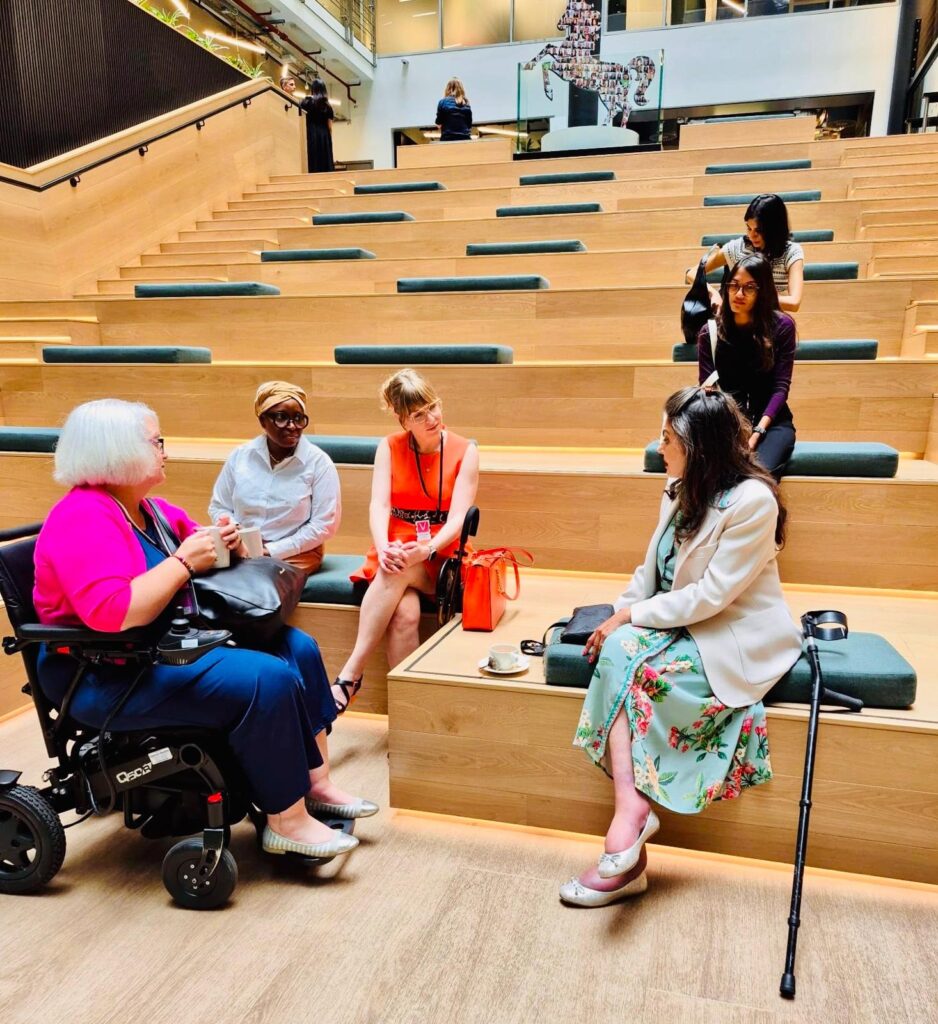
In July, I had the privilege of speaking at the Disability Finance Code for Entrepreneurship Annual Report Launch alongside fellow entrepreneurs, industry leaders and policymakers. While the conversations centred around entrepreneurship, inclusion and access to finance, what stayed with me most wasn’t any one presentation or panel discussion, it was the sense of community.
Too often, conversations about disability, business and leadership happen in isolation. We discuss barriers, opportunities and policy, but lasting change rarely comes from one organisation or one individual working alone. It comes from collaboration.
When people with lived experience sit alongside business leaders, policymakers and decision-makers, something shifts. The conversation becomes richer, more honest and ultimately, more meaningful.
As someone who has spent more than 30 years in health and social care and as an entrepreneur living with Charcot-Marie-Tooth (CMT), I’ve experienced both the challenges and the opportunities that come with navigating different worlds. Those experiences have shaped my perspective, but they don’t make my voice more important than anyone else’s. They simply make it different.
And that’s exactly why diverse perspectives matter.
Representation isn’t about filling a seat at the table. It’s about ensuring that lived experience helps shape the decisions being made. Policies, products and initiatives are always stronger when they’re informed by the people they are designed to support.
That applies not only to entrepreneurship but to social care, healthcare and every sector that aims to create better outcomes for people.
Throughout my career, I’ve learned that leadership isn’t about having all the answers. It’s about creating spaces where people feel heard, respected and able to contribute. Sometimes the most valuable thing we can do is listen to someone whose experience is different from our own.
Events like these remind me that progress is rarely achieved through one big moment.
I left the event feeling optimistic. When organisations, entrepreneurs and communities choose collaboration over competition, we create opportunities that simply wouldn’t exist otherwise.
I’m grateful to have been part of the conversation, but even more grateful for what it represented: a community of people committed to making business, leadership and society more inclusive for everyone.
One Conversation can Change Everything…
July 2026
There are moments in life that stay with you long after they’ve happened.
Not because they were planned or particularly significant at the time, but because they quietly remind you why you do what you do.
Following my attendance as a panellist at the Disability Finance Code for Entrepreneurship event, a lady came over to introduce herself. She told me that she was surprised to hear that I have Charcot-Marie-Tooth (CMT).
It’s a relatively uncommon neurological condition, and she hadn’t expected to meet someone openly talking about living with it while leading a business and speaking on stage.
Then she shared something I’ll never forget.
Her husband and teenage son both have CMT.
She told me she couldn’t wait to go home and tell them about my story. Not because my journey is extraordinary, but because she hoped it would show them that a disability doesn’t have to define what’s possible.
It’s easy to assume that when we share our experiences, they’re simply part of the conversation. We rarely see where those stories go next or whose perspective they might change.
That encounter reminded me that representation isn’t about recognition. It isn’t about being noticed or celebrated. It’s about possibility.
When people see someone with similar experiences pursuing their ambitions, leading organisations or contributing to their communities, it can gently challenge the limits they’ve placed on themselves.
I’ve never wanted my disability to define who I am. It is one part of my life, but it is not the whole story. Equally, I don’t want to hide it, because I know there may be someone quietly wondering whether their own circumstances will prevent them from achieving their goals.
If sharing my experiences helps even one person believe that a career, a business or a dream is still within reach, then every conversation is worthwhile.
This extends far beyond disability. We all carry experiences that have shaped us. Sometimes sharing them feels uncomfortable or vulnerable, but those stories have the power to encourage others in ways we may never fully appreciate.
As I reflected on that day, I realised something important. Success isn’t always measured by the audience in front of you, the title on your business card or the recognition you receive. Sometimes it’s measured by a single conversation and the hope it gives to someone you’ve never met before.
If my story gives even one person a little more confidence to believe in themselves or pursue something they once thought was out of reach, then every conversation is worth having.
If there’s one thing I’ve learned throughout my career, it’s this:
Never underestimate the impact of sharing your story.
One conversation. A few minutes. A lasting impact.
From Winner to Passing On the Baton – What the Stelios Awards Mean to Me One Year On
May 2026
Winning the Stelios Disabled Entrepreneur Award last year surprised me more than I expected it to.
As entrepreneurs, we are often so focused on the next decision and the next challenge that we rarely stop to mark how far we have come. The award gave me that moment. It also gave me something I hadn’t anticipated: a platform, and with it, a responsibility.
Disabled entrepreneurs have a complicated relationship with visibility. We want our work recognised on its merits. We also know that when disabled leaders are seen, perceptions shift. It changes what people believe leadership is allowed to look like.
I chose to use that platform this year.
The year that followed has been one of the fullest of my life, in ways I could not have planned and certainly did not expect.
I have mentored twelve entrepreneurs and business owners some through the Digital Boost platform, learning as much from them as I hope I gave. I travelled to the United States to see what exceptional, well-funded care looks like on another continent and came home with a head full of ideas and relationships that will be enduring. Those lessons have been woven into the design of Meadow View, my new 70-bed care home, being developed alongside sector specialists and community partners to build something therapeutically different.
At Iden Manor Nursing Home, I introduced technology so that residents’ hearing loss is identified earlier and the right support can be put in place sooner and have rolled out a drop in service for the local community to benefit too. A quiet change with a significant impact on daily life.
I have sat at tables that matter: including conversations with KCC, KICA, our local MP, and HSBC amongst others on the realities of social care funding, and with the Muscular Dystrophy Society at their round table on disabled women’s health challenges. I have judged sector awards and been reminded, every time, of the passion and innovation running through this sector even when the conditions are hard. I contributed to the DFCE report on barriers to finance for disabled entrepreneurs and attended the first Deaf Expo in London.
And I have written. On disabled leadership, resilience in care, and what building something that matters actually looks like from the inside, published in sector journals and beyond.
Then there were the moments I simply did not see coming. A Silver Stevie Award for Women in Business. An invitation to The King’s Garden Party at Buckingham Palace. An invitation to Monaco. A social care event on a yacht, which is not a sentence I ever imagined writing!
What I know now is that the award was not an end point. It was an opening. “I lift as I climb” has always been more than a tagline. It describes how I actually want to operate: using whatever ground I have gained to make the path a little easier for the person behind me.
Returning this year to be part of the 2026 awards and meet the new feels significant. I know what that moment feels like from the other side. I know how much it means to have your work, your determination, and your journey seen and recognised.
To this year’s finalists: your difference is not a liability. It may be exactly what gives your work its strength. Every one of you will have kept going when it would have been simpler to stop. Enjoy the moment, and be open to what comes next.
What Sir Stelios has built goes well beyond a prize. The award creates a community of entrepreneurs who understand each other’s challenges and champion each other’s progress. But the ripple effect reaches further than that. Behind every winner is a team, a workforce, a group of people being cared for or served. The impact spreads through every business the award touches, into the lives of the people those businesses exist for. That is a legacy worth celebrating.
Winning the Stelios Award was a turning point for me, and I feel deeply privileged to be part of the wider Stelios family. I have no doubt it will be just as special for this year’s winners.
Walking Through Those Gates
May 2026
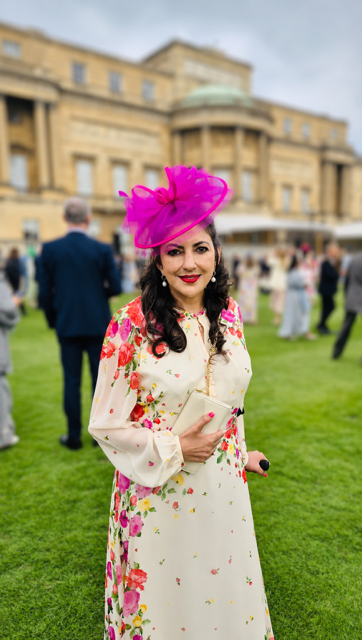
I did not expect this invitation. When it arrived, I had to read it twice.
Walking through the gates of Buckingham Palace, what struck me first was the weight of history all around me. Centuries of it. In that context, you feel very small. But small and insignificant are not the same thing, and somewhere in that thought was something that mattered to me: I have made a mark. It may be a quiet one, but it is mine, and it spurs me on.
And then, alongside that, the people. Residents, families, and care teams who show up every day without recognition or fanfare. That is who I was thinking about as I walked those gardens. This felt like their moment as much as mine.
I lift as I climb. That has never felt more true than it did that afternoon.
What A Year 2025 Has Been!
December 2025
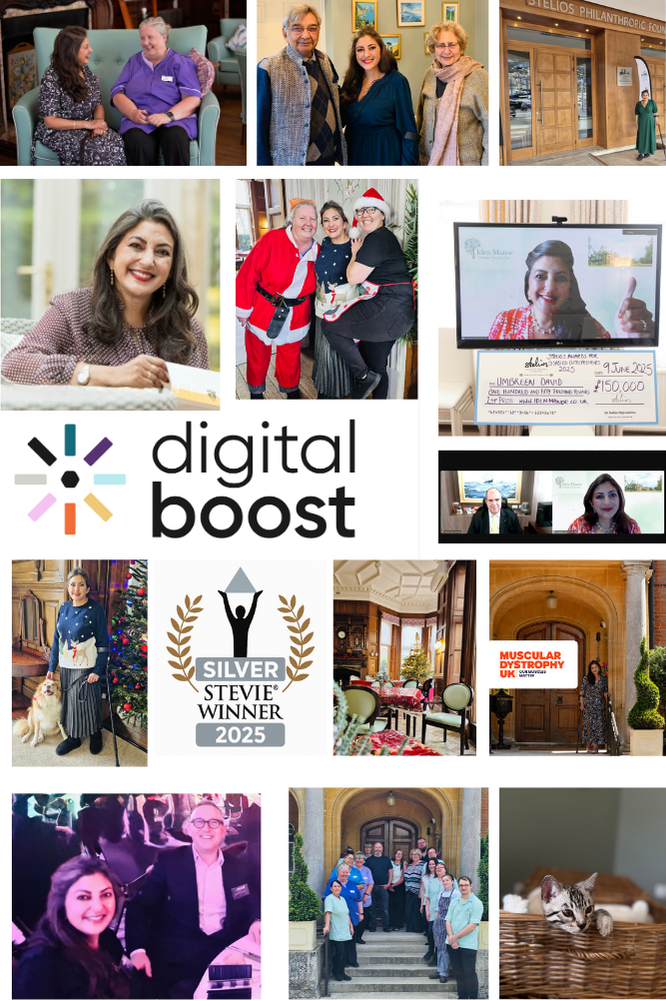
I’ve shared a few thoughts on 2025 hope you enjoy the read : Click here
Stories That Travel Further Than We Know
July 2025
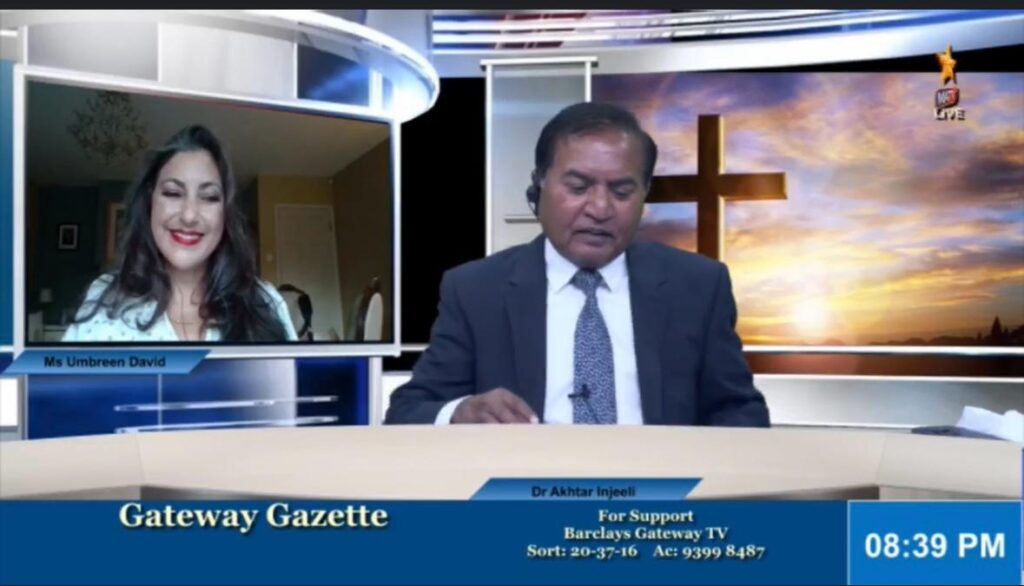
Following the publication of my article ‘A Path Made by Walking’ and the news of my Stelios Disabled Entrepreneur Award win, I was invited to speak on the Gateway Gazette Weekly News Show—a programme broadcast on Sky TV and watched by Christian communities across Pakistan, the UK, the US, Canada and Europe.
This invitation meant a great deal to me. Having grown up in this community, it felt special to return to it in a different way – not as a child listening in the background, but as a guest invited to speak. To share not just what I do, but why I do it with those who may feel underrepresented or are living with a disability.
The conversation gave space for the things that matter most to me: the part faith and upbringing has had on the values that guide my leadership, and the importance of care – not just in a professional sense, but in how I build, help, lead, and serve. I also spoke about my future plans for my company and planned project Meadow View and my ongoing work mentoring new entrepreneurs and the advice I would offer to any entrepreneurs who are finding the path difficult.
One of the things that stayed with me most from the experience was the reminder of just how powerful storytelling can be.
When someone shares their story, it gives others insight to consider their own story in a new way and the courage to share it. It creates connections and for those who might feel unseen or unheard be it in business, communities or in wider society – that can be quietly transformative.
I didn’t set out to become a public speaker or to tell my story in public. But I’ve come to realise that if my experiences can help even one person feel less alone, or more able to take their next step, then sharing them is part of my work.
I am grateful to the Gateway Gazette team for giving me the opportunity to share my story with their audience and sincerely hope that in some small way this interview has inspired others.
A Story I Didn’t Expect To Tell
August 2025
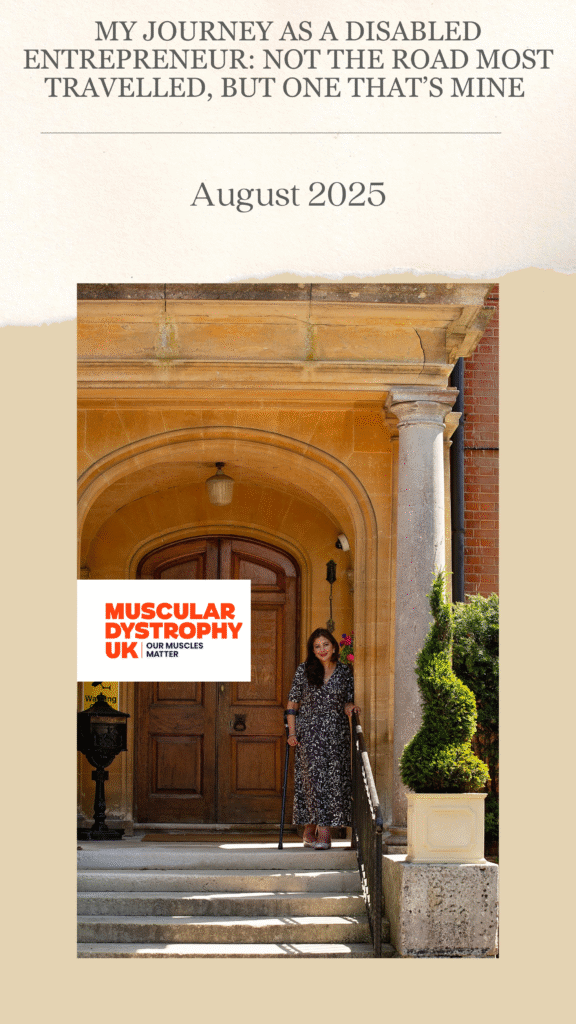
When Muscular Dystrophy UK asked if I’d be open to sharing part of my story, I didn’t jump at the chance.
I’m naturally private, and a little shy if I’m honest. But I felt this was a story that should be shared, not for show or publicity, but because it belongs to a community I’m part of. Not by design or ambition, but through a mix of fate, genetics, circumstance. I didn’t choose to live with a disability, but these are the cards I was dealt, and I’ve done my best to work with them.
This isn’t a list of achievements or dramatic milestones. It’s a slow and sometimes complicated story that’s taken shape over my childhood and adult life: education setbacks, early career choices, wonderful (and unexpected) motherhood, gradual physical decline, business growth, and long stretches of quietly figuring things out. None of it has been straightforward. But all of it has shaped how I lead, how I connect, and how I live.
There have been difficult chapters, yes, but also moments of light. My son brings more meaning than I can easily put into words. My cats, and Ossie our dog, bring comfort and laughter, especially in the moments I’ve needed it most. I’ve found joy in surprising places, and deep connection with people who’ve walked parts of this road with me.
I do feel vulnerable sharing this. Not because I’m ashamed of any of it, but because I know this part of me doesn’t tell the full story. It’s one thread in the broader tapestry of who I am.
I also know how isolating it can feel when you don’t see lives like yours reflected very often. When the stories that get told don’t feel quite like yours. And if that’s something you’ve experienced, if you’re moving through life carrying something quietly difficult, or trying to build something in circumstances that don’t make it easy – maybe reading this offers a kind of recognition or reassurance. A quiet reminder that you are not the only one working it out as you go.
That’s the real reason I said yes. And if something in my story spoke to you, then I’m glad I did.
To read the full article, click here.
Becoming the Unexpected Winner.
May 2025
It started with a chance scroll through LinkedIn on a grey, miserable weekend.
I wasn’t looking for an award and I’d never applied for one. There it was a post about the Stelios Award and something in me paused and drew me to it so on a whim I decided to apply.I didn’t think I’d qualify, I was sure there’d be stronger candidates – more dynamic, more deserving, more polished more worthy, but on a bit of a whim, I decided to apply. A few days after the deadline, an email landed in my inbox. I’d been shortlisted from 125 applicants down to just 8.
The shock was real. So was the anxiety. Could I actually go further? Why had they picked me? What did they see? The preparation began. I had no idea what to expect from the Stelios team.
Would they see past the nerves? Would I find the words? Could I explain what this journey has been – not just in business, but in life? And then came the interview. To my surprise and relief, it was warm, encouraging. empathetic, but searching.
They gave me space to tell my story – the whole story. The challenges, the grit, the things that nearly broke me, and the things that fired my passion to succeed namely my wonderful residents and incredible staff team. When it ended, I thought, Well, that was something – what an amazing experience. A privilege just to be heard and be considered. That, I assumed, would be the end of it.
Incredulously another email arrived. – I’d made it to the final stage. I was going to meet Sir Stelios himself. Elation gave way to disbelief and the self-doubt crept in quickly.
What could I possibly say that would stand out to someone like him? He’s a colossus in business—global, successful, ambitious, driven, philanthropic, sharp, impactful.
Yet here I was – just Umbreen. The nerves nearly consumed me. Sleepless nights. Imposter syndrome whispering every time I rehearsed my story.
But the day came. And he was…
He was warm, inquisitive, direct – with a gentle humour that put me at ease.
He listened closely, asked sharp questions about the business, and took real interest in my journey. And then – he called my achievements impressive. My heart sang at his word…..
He saw what I’d built, what I’d navigated and what I am leading. He told me I’d be one of the three winners – though the order hadn’t yet been decided.
It was surreal and a memory that will endure with me always. This wasn’t just recognition – it was Sir Stelios’s trust in me. He was aligning his name, his platform, his reputation – with mine, backing my work and believing in what I could achieve next.
I see this award as a challenge, quiet pact to keep going, to grow and to not let him down.
So here it is:
First Place, Stelios Award for Disabled Entrepreneurs 2025.
It still feels a little surreal.
But it also feels humbling and quietly encouraging.
These events for me are a powerful reminder that stepping outside your comfort zone –
however small the step – can lead to the most unexpected and extraordinary moments of positivity and growth.